TL;DR
- South Carolina added more residents per capita than any other state in 2025, driving steady rental demand across every major market.
- Myrtle Beach offers a low entry price around $274,000 and strong summer short-term rental income, but seasonality and condo financing complexity matter.
- Charleston has some of the strongest long-term rental fundamentals in the state, with single-family homes leasing in about 14 days and median rents near $2,838/month.
- Hilton Head delivers premium short-term rental revenue averaging $38,000 to $48,000 per year, but purchase prices are higher and jumbo financing is often required.
- Beaufort and Greenville offer steadier, more affordable entry points with consistent long-term tenant demand and lower price-to-rent dynamics.
South Carolina is not a secret anymore. People are moving here from the Northeast, from Florida, from California, and from cities across the Southeast. They are arriving fast enough that the state ranked number one in the country for population growth in 2025. That kind of in-migration creates renters, and renters create opportunity for investors.
The question is not whether South Carolina is worth looking at. The question is which market fits your goals, your budget, and your financing situation.
This post breaks down the 5 main markets where real estate investors are active in South Carolina right now: Myrtle Beach, Charleston, Hilton Head, Beaufort, and Greenville. Each one has a different investor profile, different price points, and different financing considerations. We'll walk through the data on each, then talk through how investor loans actually work in this state.
Why South Carolina is drawing real estate investors right now
South Carolina is one of the strongest rental demand stories in the Southeast because population growth is outpacing housing supply. According to the South Carolina Department of Employment and Workforce, South Carolina grew at a rate of 1.5% between July 2024 and July 2025, faster than any other state in the country. That growth has been consistent, ranking in the top six among all states for five straight years.
That population is not just being born here. According to the National Association of Realtors, South Carolina added 66,622 net domestic movers in 2025, third most in the country behind only North Carolina and Texas. People are leaving higher-cost states and landing here, and a large share of them become renters before they become buyers.
On the supply side, the state has not kept pace. South Carolina added 30,000 more households than housing units between 2018 and 2023, according to data from the SC Labor Market Information office. Vacant rental units dropped by roughly 12.7% over that same period. Tight supply plus steady demand is the basic investor setup, and South Carolina has both.
Cumulative rent growth across South Carolina since 2020 totals approximately 27.66%, with the strongest gains concentrated in coastal markets and Upstate metros.
If you are looking at loan programs that can support investor purchases across the state, the South Carolina home loans page covers the full range of options.
How to read this market-by-market comparison
Every investor situation is different. Someone looking for short-term rental income in a beach market is solving a different problem than someone building a long-term portfolio of single-family rentals in a job-growth metro.
The 5 markets below are not ranked. They are profiled. The goal is to help you understand what each market actually looks like for an investor, what the numbers suggest, and what the financing considerations tend to be in each place.
None of this is a recommendation that a specific property or market is right for your file. Your specific scenario, credit profile, loan structure, property type, and lender options all affect what makes sense for you.

Is Myrtle Beach good for rental property investing?
Myrtle Beach is one of the most accessible coastal investor markets on the East Coast, with a median home price around $274,000 as of January 2026 and a large short-term rental market driven by summer tourism. According to Homeguide Myrtle Beach, the median sale price rose 10.5% year-over-year, with strong activity in the condo segment where supply is elevated and buyers have negotiating room.
The short-term rental numbers show a seasonal market with a strong peak and a soft off-season. According to AirROI's 2026 dataset, Myrtle Beach Airbnb hosts averaged $26,016 in annual revenue, with a nightly rate of $248 and an occupancy rate of 38%. That average is pulled down significantly by winter months. According to Getchalet, July occupancy hits 82% while January sits closer to 13%. Investors who account for that gap in their cash flow projections tend to fare better than those who underwrite on peak-month numbers.
A few things to watch in Myrtle Beach specifically:
- The condo market carries elevated inventory. Rising HOA fees driven by insurance costs, and potential special assessments on older oceanfront buildings, can affect net cash flow in ways that are easy to miss at acquisition.
- Short-term rentals in Myrtle Beach are restricted to resort and commercial zoning districts. Investors need to verify permissible zones before making an offer.
- Condo and condotel financing is more complex here than in most markets. Warrantable condos, non-warrantable condos, and condotels each have different loan requirements, down payment expectations, and lender eligibility rules.
For investors financing a Myrtle Beach rental, DSCR loan options are often worth reviewing, particularly when the investor does not want to qualify on personal income documents. Our Myrtle Beach condo and condotel financing guide goes deeper on the non-warrantable condo question specifically.
Who Myrtle Beach tends to suit: Investors comfortable with seasonal income, lower entry costs, and the complexity of condo and condotel financing. Also investors who want a higher volume market with a large pool of comparable short-term rental properties to benchmark against.

Is Charleston a good place to buy a rental property?
Charleston has some of the strongest long-term rental demand fundamentals in South Carolina, supported by a deep and diversified tenant base. According to Doorstead's May 2026 market report, the Charleston metro median rent hit $2,074 across all property types in May 2026, with homes leasing in an average of 14 days. Single-family homes specifically had a median rent of $2,838/month.
That demand comes from multiple directions. Approximately 44% of Charleston households are renter-occupied. The tenant pool includes:
- Tourism and hospitality workers
- Military personnel rotating through Joint Base Charleston
- Medical professionals and residents at MUSC
- Boeing workforce employees
- A consistent inflow of young professionals and remote workers
That mix tends to support lower vacancy and more predictable leasing than markets dependent on a single demand driver.
The single-family rental market is the stronger side of the Charleston investor equation right now. Multifamily supply has been elevated, which has softened apartment rents modestly, but single-family homes have held up. A 3-bedroom single-family home in Charleston County averaged approximately $3,357/month in early 2026. Downtown Charleston commanded over $4,000/month in some submarkets.
Entry costs are higher than in Myrtle Beach or Greenville. Charleston's purchase prices reflect its demand, so investors need to underwrite carefully to confirm cash flow rather than assume it. Charleston DSCR loans are used frequently here for investors who want to qualify based on the property's rental income rather than personal tax returns or W-2s.
Who Charleston tends to suit: Investors focused on long-term appreciation and consistent tenant demand rather than peak seasonal income. Also investors with higher capital for entry costs who want a market with a diversified renter base.
Is Hilton Head Island worth buying for rental income?
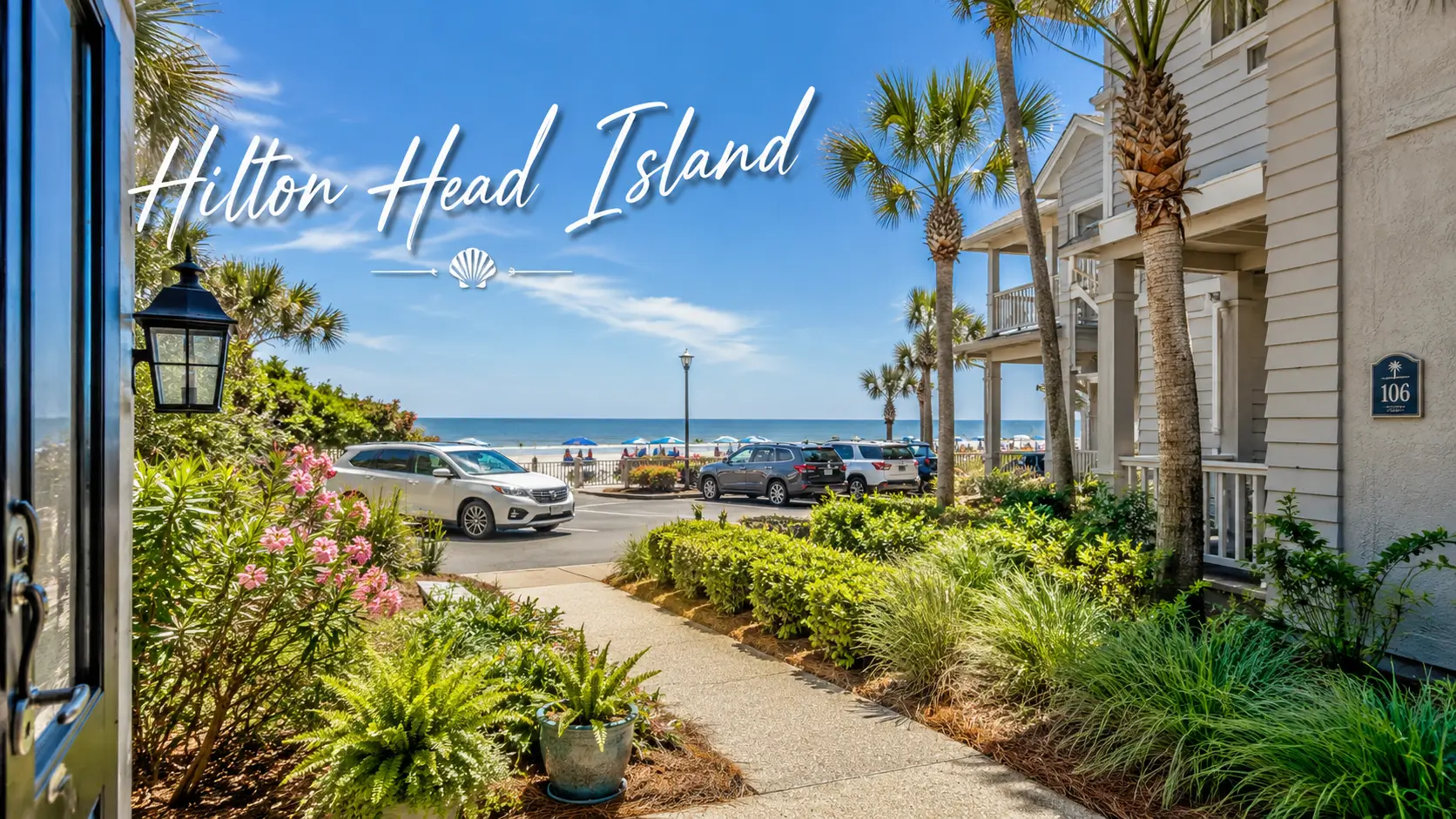
Hilton Head delivers the highest short-term rental revenue numbers of any South Carolina market, but it also comes with the highest entry costs and a financing picture that requires more planning. According to AirROI, Hilton Head hosts averaged $38,157 in annual revenue in 2026 at a $418 nightly rate and 38.1% occupancy. Getchalet's data puts average annual revenue closer to $48,860 at a 60% occupancy rate, reflecting stronger performance among well-positioned listings. Both sets of numbers reflect a market where well-run properties can significantly outperform the average.
Hilton Head has two things that most beach markets do not:
- A meaningful shoulder season — golf tourism in spring and fall extends income beyond the summer peak.
- A hard supply ceiling — the island is a developed barrier island with strict zoning, which means new supply is constrained in a way that most inland or suburban markets are not, putting a floor under property values.
The purchase price reality is significant. As of early 2026, median home values on Hilton Head sit around $766,000, which means many purchases exceed the conventional conforming loan limit and require jumbo financing. Investors need to be prepared for stronger credit, reserve, and income documentation requirements that come with jumbo loan underwriting.
For investors purchasing investment properties on Hilton Head, investment property financing options specific to the island are worth reviewing, including DSCR structures that allow qualification on rental cash flow.
Who Hilton Head tends to suit: Investors with more capital to deploy who want premium short-term rental income, appreciation potential on a supply-constrained island, and the patience to optimize a property in a competitive short-term rental market.
Is Beaufort SC a good rental market?
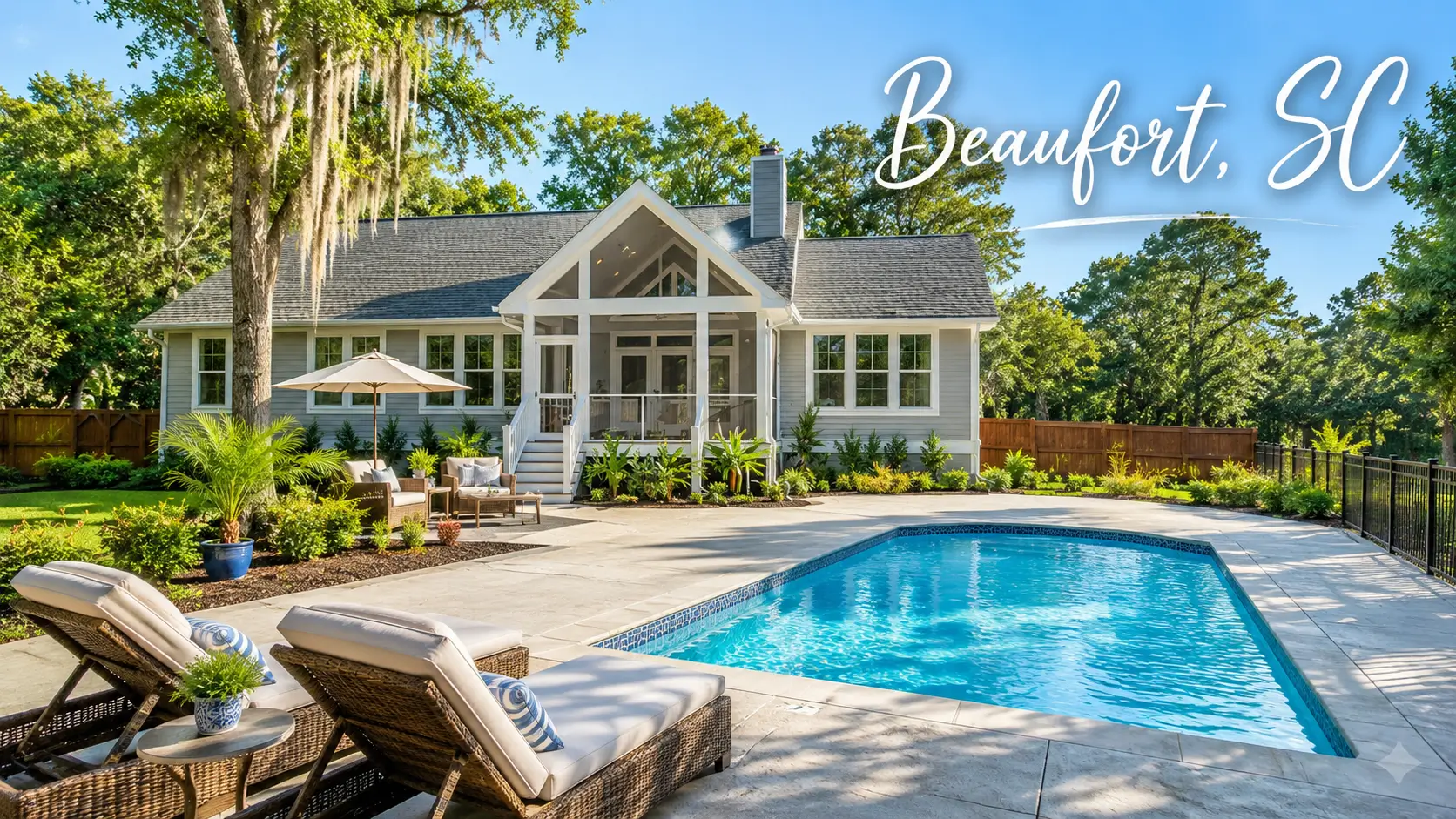
Beaufort is a steadier, more understated investment market than the higher-profile coastal names, and for some investors that is exactly what they are looking for. Average rents in Beaufort run around $1,622/month according to Redfin market data, with median home values in the $412,000 to $465,000 range depending on the source and neighborhood.
What makes Beaufort different from most markets is the stability of its tenant base. The presence of Marine Corps Recruit Depot Parris Island creates a consistent pool of military renters, relocating service members, and veteran buyers who cycle through the area on a predictable basis. That demand does not disappear when the broader economy softens, and it is less seasonal than the tourism-driven markets to the north and south.
Beaufort also attracts retirees, remote workers, and out-of-state relocators drawn by the Lowcountry lifestyle, lower property taxes, and a slower pace compared to Charleston. That mix tends to favor longer lease terms and more stable occupancy than short-term rental heavy markets.
Entry costs are moderate compared to Charleston or Hilton Head. Investors can find single-family homes in neighborhoods like Mossy Oaks, Port Royal, and Lady's Island at price points that pencil better for long-term rental returns than Hilton Head's premium waterfront pricing.
We have worked with investors and buyers in the Beaufort market for 27+ years and understand the nuances of military-connected lending, VA overlap scenarios, and the range of investor loan structures that work in this market. If you are looking at Beaufort home loans for an investment purchase, that page covers the local landscape.
Who Beaufort tends to suit: Investors who want a stable, military-supported tenant base, moderate entry costs, and a long-term hold strategy. Also investors who want less seasonality than Myrtle Beach or Hilton Head.

Is Greenville SC a good place for rental property?
Greenville is the Upstate market that keeps showing up on investor radar because the numbers are hard to argue with. Median home prices sit around $345,000, entry costs are lower than any coastal market on this list, and rental demand is driven by one of the most diversified job bases in South Carolina.
Average rents in Greenville run approximately $1,568/month for apartments according to RentCafe's 2026 data, with single-family homes and 3-bedroom units pushing well above that. The metro occupancy rate averages 95.5%, supported by employers including BMW, Prisma Health, Fluor, and a growing cluster of tech and engineering companies that have relocated to the Upstate.
Greenville is also pulling population from higher-cost metros. People relocating from Atlanta, Charlotte, and the Northeast are landing here for affordability and quality of life. Lott Management's 2025 rental market analysis notes that Greenville's rental market is driven by healthy economic fundamentals rather than boom-and-bust tourism cycles, which tends to produce more predictable investor outcomes.
The tradeoff is that Greenville is primarily a long-term rental market. Short-term rental income exists here, particularly around downtown events and Upstate tourism, but it is not the primary driver the way it is in coastal markets. Investors who want consistent long-term tenants in a job-growth metro tend to find Greenville a strong fit.
For Upstate investors, Greenville home loans covers the financing programs available in that market.
Who Greenville tends to suit: Investors focused on long-term cash flow, lower entry costs, and a diversified employment base rather than seasonal tourism income.
South Carolina rental markets at a glance
| Market | Investor profile | Approx. median home price | Avg. rent / STR revenue | Best for |
|---|---|---|---|---|
| Myrtle Beach | Short-term rental, condo investor | ~$274,000 | ~$26,016/yr STR avg | Seasonal STR, lower entry cost |
| Charleston | Long-term rental, appreciation play | Higher ($500K+) | ~$2,838/mo SFH | Diversified tenant base, long holds |
| Hilton Head | Premium STR, second home investor | ~$766,000+ | ~$38K–$49K/yr STR | High revenue STR, supply-constrained market |
| Beaufort | Stable long-term rental | ~$412K–$465K | ~$1,622/mo | Military-driven stability, moderate entry |
| Greenville | Long-term rental, workforce housing | ~$345,000 | ~$1,568/mo+ | Affordable entry, job-growth market |
All figures are market averages. Individual property performance depends on location, property type, management, and other factors. Investors should review specific properties and scenarios rather than relying on market averages alone.
Which South Carolina rental market fits my investing goals?
The right SC rental market depends on what kind of returns you are building toward and how much capital and complexity you can manage. No single market is best for every investor, and the same city can work differently depending on whether you are buying a condo, a single-family home, or a multi-unit property.
Here is a general mapping to help think it through:
- Myrtle Beach — Short-term rental income with a lower entry point, with eyes open on condo financing complexity and winter vacancy.
- Charleston — Strong long-term tenant demand and a market that has held up through cycles; one of the most consistent options in the state.
- Hilton Head — Premium short-term rental revenue and a supply-constrained market with appreciation potential, if your capital and financing qualify.
- Beaufort — Stable, military-supported tenant base with moderate entry costs and less seasonality; suits long-term holders well.
- Greenville — Affordable entry, diversified job-market demand, and predictable long-term occupancy; one of the steadiest investor stories in the Upstate for several years.
The honest answer is that most investors should start with their financing capacity and work backward to the market, rather than picking a market first and then figuring out the loan.
How do I finance a rental property in South Carolina?
Investors in South Carolina have more loan options than many realize, and the right structure depends on the property, the investor profile, and the goal. The most common investor loan types worth knowing about:
DSCR loans are one of the most flexible options for rental property investors. DSCR stands for Debt Service Coverage Ratio. Instead of qualifying based on your personal income, W-2s, or tax returns, the loan qualifies on the property's rental cash flow relative to the mortgage payment. This is useful for self-employed investors, investors with multiple properties, or anyone whose personal income picture is complicated. You can learn more about how DSCR loans work and who they fit.
Conventional investor loans use traditional income and credit qualification and work well for investors who have straightforward W-2 income and are buying a standard single-family rental. See how conventional loans work for South Carolina investors.
Bank statement loans are a Non-QM option for self-employed investors who want to document income through deposits rather than tax returns. The bank statement program page explains how qualification works without traditional income documentation.
Jumbo investor loans come into play for higher-value markets like Hilton Head, where purchase prices often exceed conforming loan limits. The jumbo loans page covers high-value financing options for South Carolina buyers.
The key thing investors sometimes do not know is that DSCR loans may allow them to qualify without using their own personal income documents at all. Qualification is based on whether the property's rental income can support the debt, not whether the investor's tax return shows enough income. Depending on the borrower, the property, the lender, and market conditions, this structure can open doors that standard loan underwriting closes.
Every investor scenario is different. Rates, down payment requirements, DSCR ratios, reserves, and loan terms all vary based on the investor profile, property type, rental income, lender, and market. A custom quote is the right starting point. You can reach us by phone or text to get your scenario reviewed.
If another lender told you no, that's not the end of the story
I want to say something directly to investors who have already been to a bank or another lender and heard "no."
Sometimes investor loans get declined at one institution but approved at another. Banks and retail lenders operate with their own internal lending guidelines, which can be tighter than what FHA, Fannie Mae, VA, or investor loan program guidelines actually require. Those overlays are not the law. They are that lender's choice.
Beaufort Lending works as a mortgage broker, which means we have access to multiple wholesale lenders and can shop your file across options that a single bank simply cannot offer. We have helped investors close loans after being told no elsewhere. That is not a guarantee that every file has a path forward, but it does mean that one "no" is not necessarily the final answer.
If you have been turned down on an investment property loan, or if you are not sure your file will qualify, it is worth getting a second opinion before you assume the deal is dead.
Benji Gecy, NMLS #302188 / Beaufort Lending, NMLS #1703543. Top 1% National Mortgage Broker. 27+ years serving South Carolina communities. 168 five-star Google reviews.
Why Work With Beaufort Lending on Your SC Investment Property
Benji Gecy launched his lending career in 1997 and has been recognized as a Top 1% mortgage broker nationally for five consecutive years. Here is what that means when you work with us on an investment purchase:
- Wholesale lender shopping across dozens of options — not one bank's rate sheet
- A team that works investor files every week across every SC market covered in this article
- Mortgage rates consistently below the national average
- Qualified buyers can close in as little as 12 to 15 days
With 168 five-star Google reviews, the track record speaks for itself. Get an instant rate quote anytime, day or night, at beaufort.mortgage/instant-rate-quote, or chat with our team — Opens in Messenger if you have questions before you are ready to pull a quote.
The bottom line
South Carolina is one of the better states in the country to build a rental portfolio right now. Population growth is real, rental demand is spread across multiple market types, and entry costs are still reasonable compared to what investors are facing in Florida, the Northeast, or the West Coast.
The right market for you depends on your goals, your capital, and what kind of tenants and income you are building toward. The right loan depends on your file.
If you are ready to look at your options, give us a call or send us a text. We will review your scenario, look at the markets you are considering, and give you a straight answer on what financing may be available for your situation. Borrowers need to qualify, and every file is different, but we are happy to start the conversation and see what makes sense.
Ready to Finance Your South Carolina Rental Property?
Get a custom rate quote in minutes, run your DSCR numbers, or reach out with questions about investor loans.
- DSCR Calculator
- Call Us: 843-524-2404
- Text Benji a Question: 843-441-0668
- Chat With Our Team — Opens in Messenger
Other Resources You May Find Helpful
- DSCR Loans in South Carolina
- South Carolina Home Loans Overview
- Bank Statement Loans in South Carolina
Rates, terms, eligibility, and loan program availability vary by borrower, property, lender, and market conditions. This post is for informational purposes. Contact Beaufort Lending for a custom rate quote based on your specific scenario.