
Originally published May 30, 2025 · Updated September 4, 2026
A Columbia-Area Second Home Should Make Your Weekends Feel Different
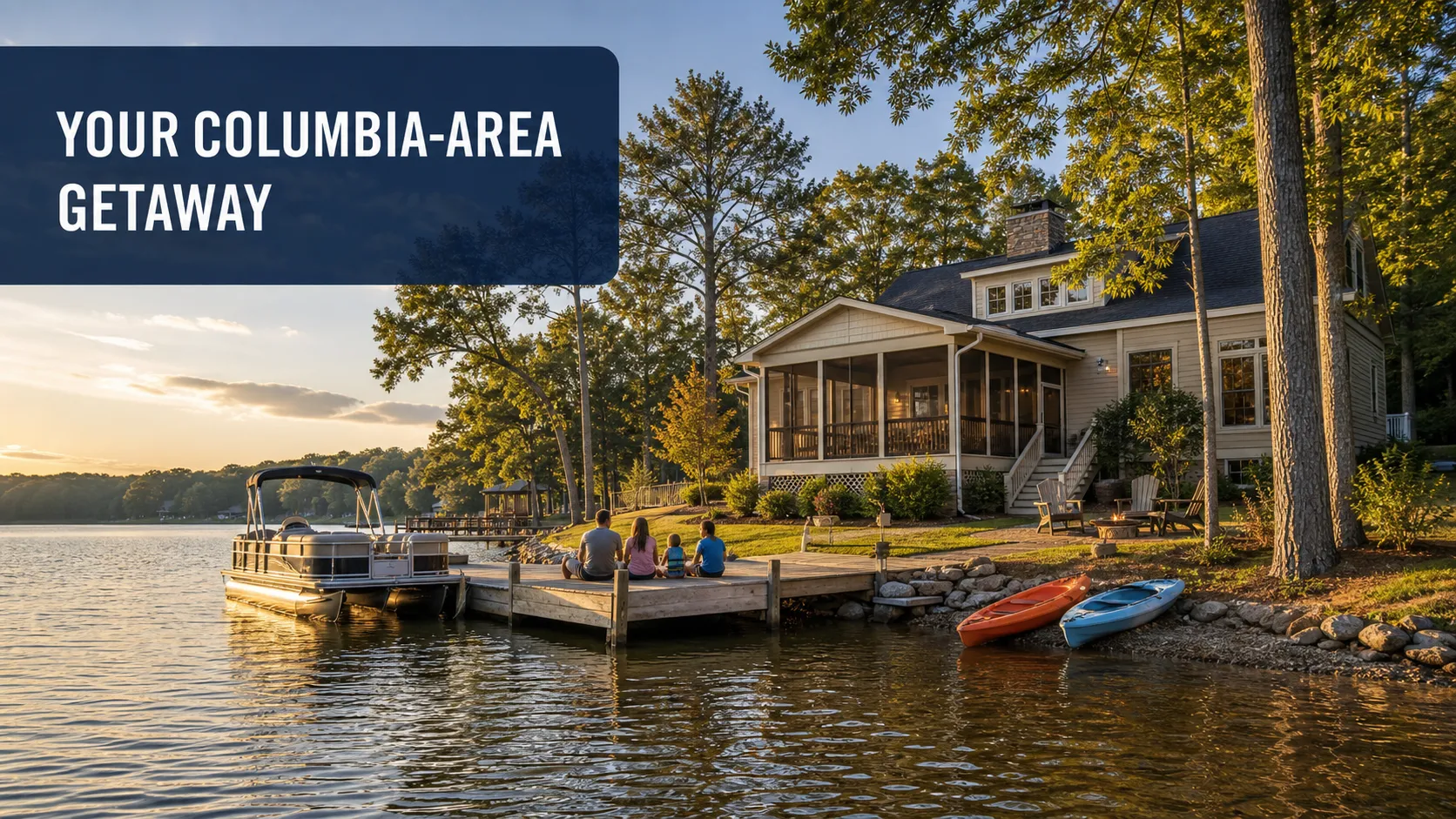
A second home near Columbia is not only a smaller version of a primary residence. It may be the place where the boat stays packed, the fishing rods live in the garage, the grandchildren learn to swim, or the family gathers without a long drive to the coast. Around Lake Murray and Lake Wateree, buyers can look for water access, a workshop, extra parking, a quiet porch, or enough space to decompress from the workweek.
The financing starts with a less romantic question: Will this be a home you personally use, or a property you expect to operate for rental income? That answer separates second-home financing from investment-property financing and prevents an occupancy problem after closing.
The short answer: A genuine personal getaway may qualify for conventional second-home financing with as little as 10% down, subject to underwriting. If the loan amount exceeds South Carolina's 2026 conforming limit of $832,750, a jumbo product may be needed. If rental income is central to the plan or needed to qualify, compare investment-property and DSCR financing instead.
What Actually Counts as a Second Home?
Under Fannie Mae's second-home requirements, the borrower must occupy the property for part of the year. It must be a one-unit home suitable for year-round occupancy, remain under the borrower's exclusive control, and not operate as a rental property or timeshare. A management agreement that gives someone else control over occupancy is also a problem.
Occasional rental activity does not automatically disqualify a property, but Fannie Mae says that rental income cannot be used to qualify for the second-home loan. The personal-use story must be real. A home purchased mainly for Airbnb, Vrbo, long-term tenants, or student rent belongs in an investment-property conversation.
| Your actual plan | Financing path to compare | Important constraint |
|---|---|---|
| Family weekends, holidays, boating, fishing, and personal seasonal use | Conventional second-home loan | You qualify using your own income and debts; projected rent is not used. |
| Personal getaway with a loan amount above $832,750 | Jumbo second-home loan | Credit, reserve, appraisal, and down-payment rules vary by lender. |
| Frequent short-term rental or long-term tenant use | Conventional investment or DSCR loan | The property must be disclosed and underwritten as an investment. |
| Self-employed buyer whose tax returns do not reflect current cash flow | Bank-statement second-home loan | Eligibility and income calculations vary among non-QM lenders. |
Where a Getaway Can Make Sense Around Columbia
Lake Murray is the center of the local second-home conversation, but it is not one uniform market. The South Carolina Department of Natural Resources identifies roughly 50,000 acres of water and 520 miles of shoreline across Lexington, Newberry, Richland, and Saluda counties. Your county, shoreline, access road, utilities, insurance, and nearby comparable sales can all change the financing picture.
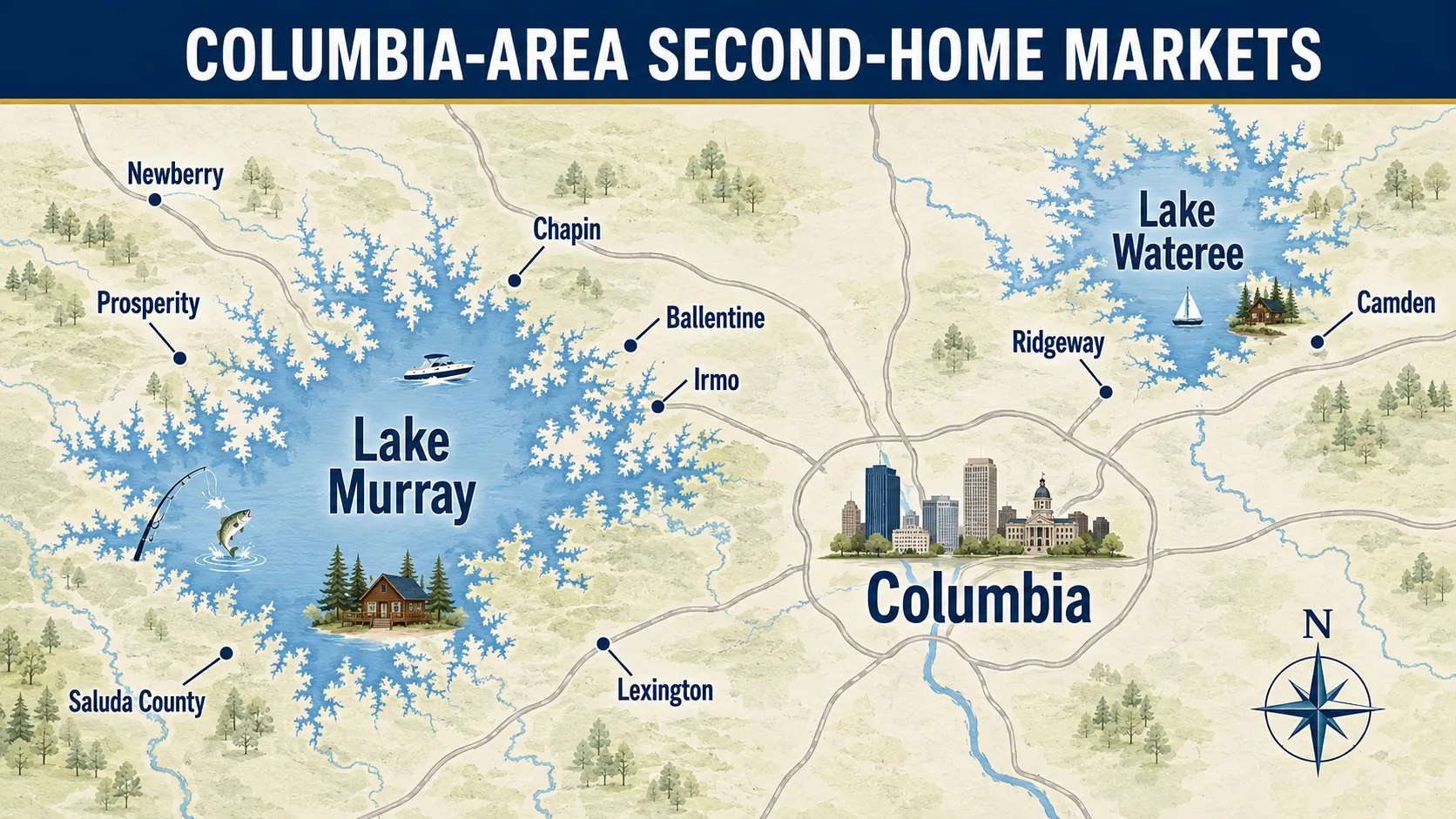
Lexington, Irmo, and Ballentine
These areas work for buyers who want lake time while remaining close to groceries, restaurants, medical care, and downtown Columbia. Expect a mix of established neighborhoods, waterfront homes, condos, and communities where HOA or architectural rules may apply.
Chapin and the North Shore
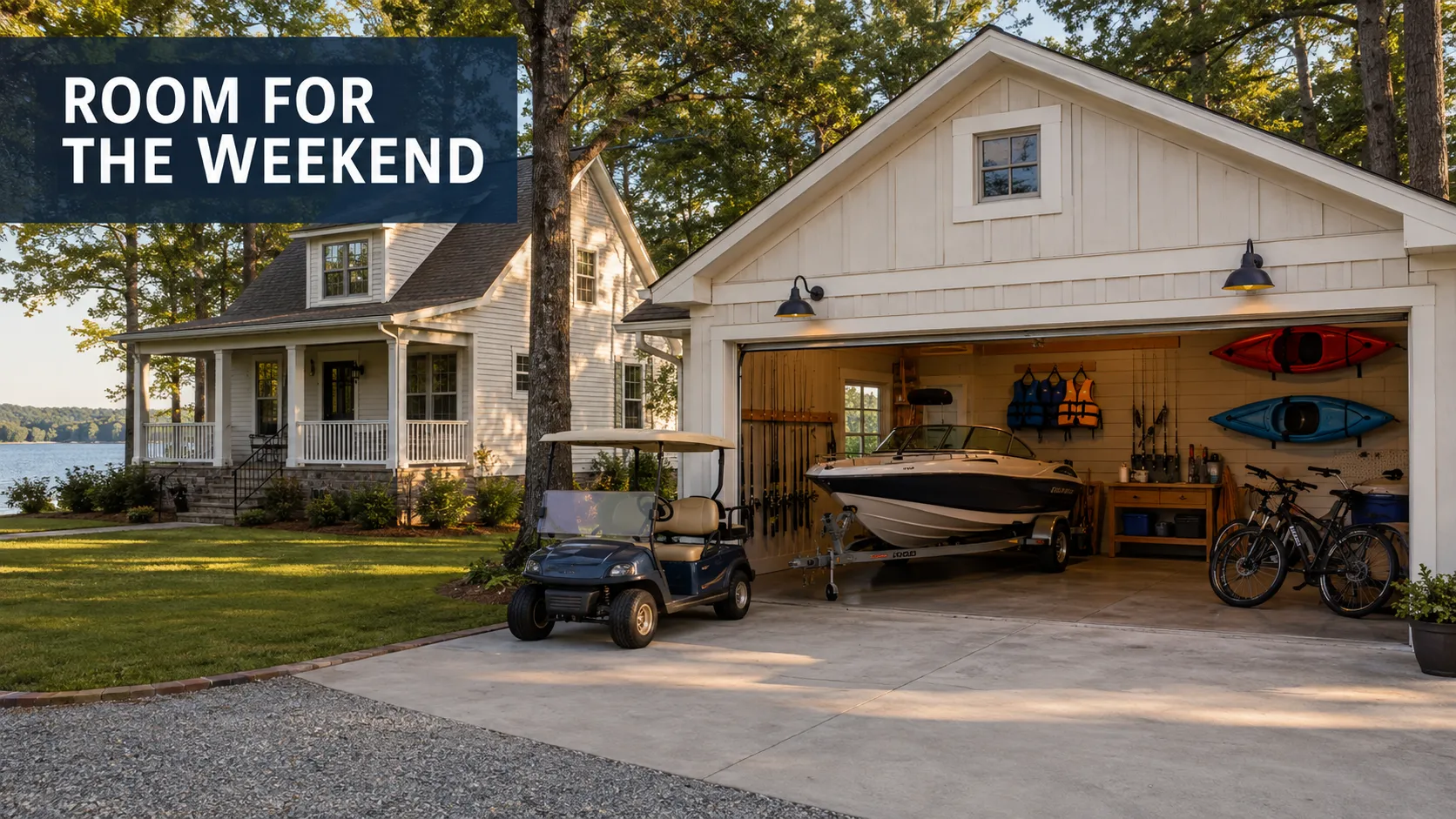
Chapin can balance access to Columbia with a more relaxed lake-town rhythm. Depending on the property, buyers may find room for a boat, trailer, workshop, or larger garage—but every parcel still needs a restriction, zoning, and insurance review.
Prosperity, Newberry, and the Western Shore
This side can appeal to buyers who prioritize quiet water, a cabin feel, or more separation from the city. The tradeoff may be a longer drive, fewer nearby comparable sales, private-road questions, and greater reliance on wells or septic systems.
Saluda County Shoreline
Buyers seeking a more rural retreat may look toward the western and southwestern lake. Confirm year-round road access, utilities, internet, emergency services, dock status, and whether the home's condition fits the intended loan program.
Lake Wateree and Camden
Lake Wateree offers another fishing-and-boating option about 30 miles northeast of Columbia. SCDNR places the lake in Fairfield, Kershaw, and Lancaster counties, while Kershaw County applies a lake overlay district to certain development and dock work.
Rural Acreage Near Ridgeway or Blythewood
Acreage may suit buyers who want a workshop, room for outdoor gear, or a quieter base without being directly on the water. The lender still has to accept the property type, improvements, acreage, access, and intended occupancy.
The official Capital City/Lake Murray Country tourism guide highlights boating, fishing, golf, family activities, and access to Columbia. Those are good reasons to buy a getaway. They are not substitutes for checking whether a particular property can legally and practically support your boat, RV, dock, workshop, guests, or rental plans.
Want Space for the Boat, Golf Cart, or Workshop? Verify It Before You Offer
Some buyers deliberately look outside city limits because they want fewer urban constraints and more room to store recreational equipment. That can work well, but “outside city limits” does not mean “no rules.” County zoning, recorded covenants, HOA restrictions, utility easements, floodplain requirements, and shoreline-management rules may still control what you can park, build, rent, or change.
- Ask for all covenants and HOA documents. Confirm rules for boats, trailers, RVs, short-term rentals, fences, garages, and detached workshops.
- Verify dock and shoreline status. An existing dock is not proof that expansion, repair, or replacement will be approved.
- Price insurance before the due-diligence deadline. Waterfront exposure, flood zones, roof age, tree cover, and distance from fire protection can affect availability and cost.
- Inspect well, septic, and private roads. These systems can change repair costs and create underwriting conditions.
- Confirm year-round habitability. A conventional second home must be suitable for year-round occupancy; a rustic structure without reliable utilities may not qualify.
- Make sure the appraisal has usable comparisons. Unique acreage, unusual outbuildings, or a one-of-a-kind waterfront location can make value harder to support.
The 2026 Loan Limits That Matter
| 2026 reference | One-unit limit | How it affects a Columbia-area second-home buyer |
|---|---|---|
| Baseline conforming limit | $832,750 | A conventional second-home loan at or below this amount may remain conforming. The limit applies to the loan amount, not the home's purchase price. |
| FHA floor for Columbia-area counties | $541,287 | Useful context for the broader market, but FHA requires a principal residence and cannot finance a vacation or second home. |
| Jumbo territory | Above $832,750 | The loan is nonconforming, so lender-specific jumbo requirements apply. |
The Federal Housing Finance Agency set the 2026 baseline conforming limit at $832,750 for a one-unit property. HUD set the 2026 FHA one-unit floor at $541,287. Richland, Lexington, Newberry, Saluda, Kershaw, Fairfield, and Lancaster counties use that FHA floor.
A $950,000 lake house is not automatically a jumbo transaction. With 20% down, the base loan would be $760,000 and could fit below the conforming ceiling. Conversely, a smaller down payment can push the loan above the limit. Run the purchase price and down payment together before deciding which product you need.
Conventional Second-Home Financing: The Usual Starting Point
For a genuine personal getaway, a Columbia conventional mortgage is usually the first program to evaluate. Fannie Mae's August 2026 eligibility matrix allows up to 90% loan-to-value on a one-unit second-home purchase, which translates to a 10% minimum down payment when the file meets all requirements.
Ten percent down is a ceiling on leverage, not a promise of approval or the best structure. Credit, debt-to-income ratio, property type, reserves, mortgage insurance, and loan-level pricing all matter. Buyers carrying a primary mortgage plus a lake-home payment should compare 10%, 15%, and 20% down rather than assuming the smallest down payment produces the best overall result.
When a Lake Murray Purchase Becomes a Jumbo Loan
If the loan amount—not the sales price—exceeds $832,750, compare jumbo mortgage options. This comes up most often with premium waterfront homes, large renovated properties, or purchases where the buyer wants to preserve cash instead of making a larger down payment.
Jumbo second-home rules are not controlled by one universal matrix. Depending on the lender and loan size, the file may need stronger credit, a larger down payment, more post-closing reserves, or an additional appraisal review. A broker comparison is useful because one lender's property or reserve rule may differ materially from another's.
If Rental Income Drives the Decision, Treat It as an Investment
A property can be personally enjoyable and still be an investment for mortgage purposes. If you expect frequent short-term rental activity, plan to sign a long-term lease, or need projected rent to qualify, compare the article's second-home path with Columbia DSCR financing. A DSCR loan evaluates the property's rental income against its housing expense rather than relying on the buyer's personal employment income in the usual way.
Do not choose the occupancy label based on which rate or down payment sounds better. Use the category that matches the real plan. That protects the borrower and also helps the lender calculate taxes, insurance, rent, reserves, and cash flow correctly.
Self-Employed Buyers Have Another Comparison to Make
Business owners, consultants, healthcare practitioners, and government contractors may have strong cash flow but tax returns that show lower net income after legitimate deductions. If standard documentation does not capture the full picture, a bank-statement mortgage may be worth comparing with conventional financing. These programs may allow second homes, but the deposit analysis, expense factor, down payment, and reserves vary by lender.
Another possible source of funds is existing home equity. A Columbia second mortgage or HELOC may help fund a down payment or improvements without selling the primary residence. The new payment must still be included in qualification, so model both debts before moving money.
Already have a property in mind?
Send the address, purchase price, planned down payment, intended personal use, expected rental activity, and current housing payment. That is enough to start comparing second-home, jumbo, and investment-property paths.
Submit Your ScenarioBudget for the Home You Will Own, Not Just the Mortgage
South Carolina does not tax a second home like a legal primary residence. The South Carolina Department of Revenue states that a second or vacation home is assessed at 6% of fair market value, compared with 4% for a qualifying primary residence. Second homes also do not receive the primary-residence exemption from school operating millage. Ask the county for a property-specific estimate instead of copying the seller's current tax bill.
Your useful monthly budget should also include homeowners and flood insurance, HOA dues if any, utilities kept active year-round, lawn and shoreline maintenance, pest control, dock or boat storage, travel costs, and a repair reserve. A lower purchase price farther from Columbia may come with higher maintenance or access costs; a community closer to Lexington or Irmo may trade those concerns for dues and restrictions.
Questions Columbia-Area Second-Home Buyers Ask
How much do I need to put down on a second home?
Fannie Mae's current maximum loan-to-value ratio is 90% for an eligible one-unit second-home purchase, so 10% down is the conforming minimum. Your approval, pricing, mortgage insurance, and reserve requirement depend on the full scenario, and 15% or 20% down may produce a different total-cost result.
What is the conforming loan limit around Columbia in 2026?
The 2026 one-unit baseline conforming loan limit is $832,750 throughout South Carolina. A loan amount above that threshold requires jumbo or another nonconforming product. The purchase price can be higher if the down payment keeps the loan amount at or below the limit.
What is the 2026 FHA loan limit in Richland and Lexington counties?
The 2026 one-unit FHA limit is $541,287 in Richland, Lexington, Newberry, Saluda, Kershaw, Fairfield, and Lancaster counties. FHA financing is for principal residences, however, so the limit does not create an FHA second-home option.
Can I rent my Lake Murray second home sometimes?
Occasional rental may be compatible with conforming second-home financing when all second-home requirements are met, but rental income cannot be used to qualify and a management agreement cannot control occupancy. Local zoning, HOA covenants, insurance, tax treatment, and platform rules may impose separate limits. Disclose the actual plan to the lender.
Does a second home have to be 50 miles from my primary residence?
Fannie Mae's published second-home requirements do not state a universal 50-mile rule. The property must be genuinely occupied by the borrower for part of the year and make sense as a second home. When it is close to the primary residence, expect the lender to examine the purpose and occupancy more carefully.
Can I buy a cabin that is not winterized?
A conforming second home must be suitable for year-round occupancy. A seasonal structure without dependable utilities, safe access, or standard residential features may not qualify. Have the lender and insurer review unusual property characteristics early.
Are homes outside Columbia usually free of HOA restrictions?
No. Some rural properties have no HOA, while others are subject to recorded covenants, road-maintenance agreements, architectural controls, or lake-specific restrictions. Verify boats, RVs, workshops, fences, docks, and rental rules during due diligence.
Should a Lake Murray rental use a second-home loan or DSCR?
If personal use is the real purpose and rent is incidental and not needed for qualification, second-home financing may fit. If rental income drives the purchase or is needed to qualify, an investment-property or DSCR structure is generally the more appropriate comparison.
Turn the Getaway Idea Into a Property-Specific Plan
Start with how your family will use the home. Then match that plan to the address, county, property type, down payment, loan amount, reserve needs, and rental expectations. That sequence makes it easier to decide whether a Lake Murray retreat, a Lake Wateree cabin, or rural acreage outside Columbia is a comfortable escape or an expensive obligation.
You can also use the mortgage calculators for an early payment estimate or review current rate options for your scenario. A live quote is more useful than a generic rate claim because second-home pricing changes with credit, equity, property type, loan amount, and market conditions.
Planning a Columbia-area getaway?
Compare the right financing before you make the offer
Share the property, how you will use it, and what you want the monthly commitment to feel like. Beaufort Lending can compare conventional, jumbo, DSCR, and alternative-documentation paths against the same real scenario.
Benji Gecy, NMLS #302188 · Beaufort Lending, NMLS #1703543 · Equal Housing Lender
Related Columbia Financing Resources
- Conventional mortgages for Columbia buyers
- Jumbo loan options
- DSCR loans for Columbia rental properties
- Bank-statement mortgages for self-employed buyers