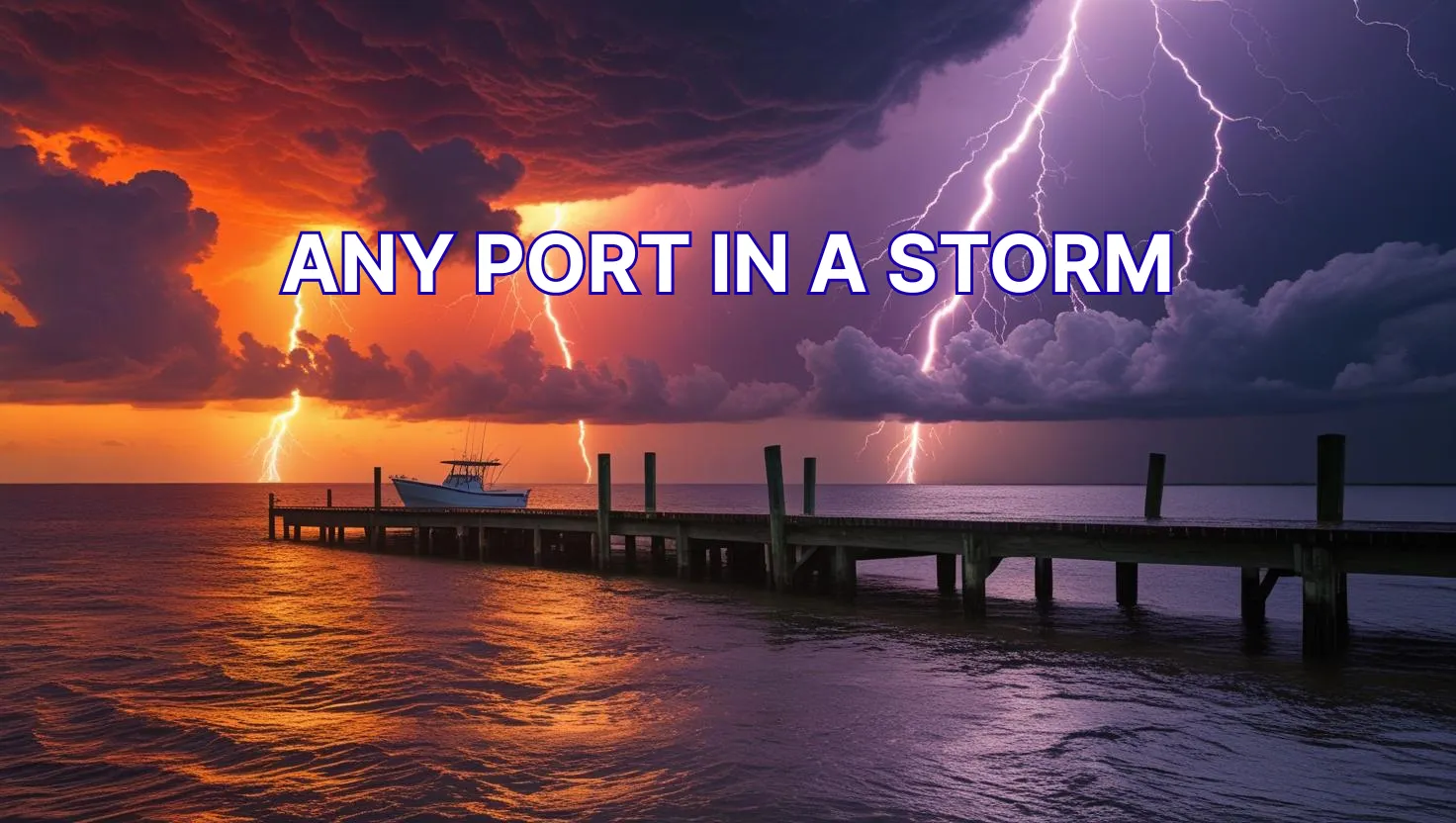
On Saturday, July 12th, what started as a perfect day on the Beaufort River sandbar quickly turned treacherous. Lightning strikes were hitting within 800 feet of Gecy's 23-foot deck boat, which carried 11 passengers including children and inexperienced boaters. With engine trouble after hitting bottom while navigating off the sandbar and a severe weather warning urging everyone to seek immediate shelter, Gecy made the only decision any responsible boat captain could make.
"I chose life over property," Gecy stated. "Lightning strikes were hitting within 800 feet of the boat. I had children and seven other inexperienced boaters who felt their lives were in danger under a severe weather warning that told you to seek shelter and get off the water."
A Waterman's Heritage
This wasn't Gecy's first encounter with dangerous Lowcountry weather. As a lifelong Beaufortonian, surfer, and waterman, he's navigated these waters for decades. His commitment to water safety extends beyond his own family - ten years ago, Gecy made headlines when he saved a drowning boy at a local beach, an act of heroism that was covered by local news outlets.
"Any port in a storm has been a known safety protection in my family for decades and is a necessary tool that I have used before many times navigating the Lowcountry waters when severe storms pop up," Gecy explained. "Never have I had any commercial business or private landowner question or object to my pursuit for safety."
Understanding Your Rights as a Boat Captain
The concept of "any port in a storm" isn't just a maritime saying - it's a fundamental principle of boater safety that has protected mariners for centuries. When severe weather threatens lives, boat captains have both the right and responsibility to seek the nearest safe harbor, regardless of property restrictions.
As boat captain, you are charged with the safety of your passengers. This responsibility supersedes property concerns when lives are at stake. Maritime law has long recognized the principle of necessity when it comes to emergency docking during severe weather conditions.
The Reality of Lowcountry Boating
The Lowcountry's vast network of waterways - from Charleston Harbor to the rivers around Beaufort and Hilton Head Island - can present unique challenges when storms develop rapidly. Weather conditions can change in minutes, leaving boaters with limited options for safe harbor.
"The weather was severe and I was having engine problems. The public day dock was the only option," Gecy noted. With Factory Creek marina on the other side of the Woods Memorial Bridge not accessible in lightning conditions, the nearby day dock represented the only viable safety option.
Making Safe Decisions on the Water
For boaters throughout the Charleston, Myrtle Beach, Beaufort, Hilton Head Island, and Columbia areas, Gecy's experience serves as an important reminder about prioritizing safety:
Key Safety Principles:
Monitor weather conditions constantly
Know your nearest emergency docking options
Don't hesitate to seek shelter when conditions deteriorate
Remember that as boat captain, passenger safety is your primary responsibility
Understand that emergency situations may require using private docks for safety
A Community That Supports Water Safety
The Lowcountry boating community has always been built on mutual support and understanding of our challenging waters. Local marinas, dock owners, and fellow boaters typically understand that when severe weather strikes, providing emergency shelter isn't just neighborly - it's the right thing to do.
"To be obstructed by water festival volunteers was disappointing and negligent. They had no right to try and throw my family back into harm's way on the water," Gecy observed, highlighting the importance of community support during weather emergencies.
Legal Protections for Emergency Docking
Maritime attorney Jared Newman, representing Gecy, points to the legal concept of "force majeure" - unforeseeable events that make it impossible to meet normal legal obligations. "It's kind of an act of God," Newman explains, referring to the legal protection that exists for emergency situations beyond a person's control.
This legal principle recognizes that when faced with immediate danger, property rights must yield to human safety. Courts have historically supported boaters who seek emergency shelter during severe weather, understanding that the alternative could be loss of life.
Standing Strong for Boater Rights
"I made the right call and would do the same thing 100%," Gecy affirms. His willingness to stand up for fundamental boater safety rights benefits the entire Lowcountry maritime community. By challenging what he sees as an unjust citation, Gecy is helping to preserve the time-honored principle that any port in a storm must remain available to boaters in distress.
The case, scheduled for hearing in August, will likely set important precedent for how emergency docking situations are handled in the future.
Your Safety, Your Rights
For every boater who has ever faced a sudden squall, equipment failure, or dangerous conditions on Lowcountry waters, Gecy's stand represents something larger than one incident. It's about preserving the fundamental right to seek safety when lives are at stake.
As Gecy's attorney Newman noted, "It didn't start out that way. It turned more heated because of anger and frustration with the situation." The frustration stems from a simple truth - when you're responsible for 11 lives in a lightning storm with failing equipment, property concerns become secondary to human safety.
The Lowcountry's boating community continues to support the principle that has guided mariners for generations: in times of genuine emergency, any port truly can and should be a safe harbor.
Benji Gecy is a lifelong Beaufort resident, mortgage broker, surfer, and experienced waterman who has been navigating Lowcountry waters for decades. His commitment to water safety includes a heroic rescue of a drowning child that made local headlines ten years ago.